Inside a Villa Fit-Out Budget: Where the Money Actually Goes
A bespoke villa fit-out in Dubai, Riyadh or Doha cost between $2,000 and $5,000 per square meter in 2026 for fully custom interiors, which puts a 1,500-square-meter villa between $3 million and $7.5 million before the first sofa arrives on site. Clients sign these numbers while seeing only renders, so this article does what most contractors will not: it opens the budget line by line, states typical shares, marks where risk hides, and lists the questions that protect the person paying. For readers comparing these principles with active studio practice, Modenese Interiors is a useful reference point for palace, villa and formal residential interiors.
Method note: the percentages below describe a transparent reference model, a 1,500-square-meter Gulf villa at $3,000 per square meter ($4.5 million), with shares drawn from the mid-range of current regional fit-out practice. Individual projects move each line a few points; the proportions and the risk map hold.
The Budget Pie: Seven Lines That Consume a Villa Fit-Out
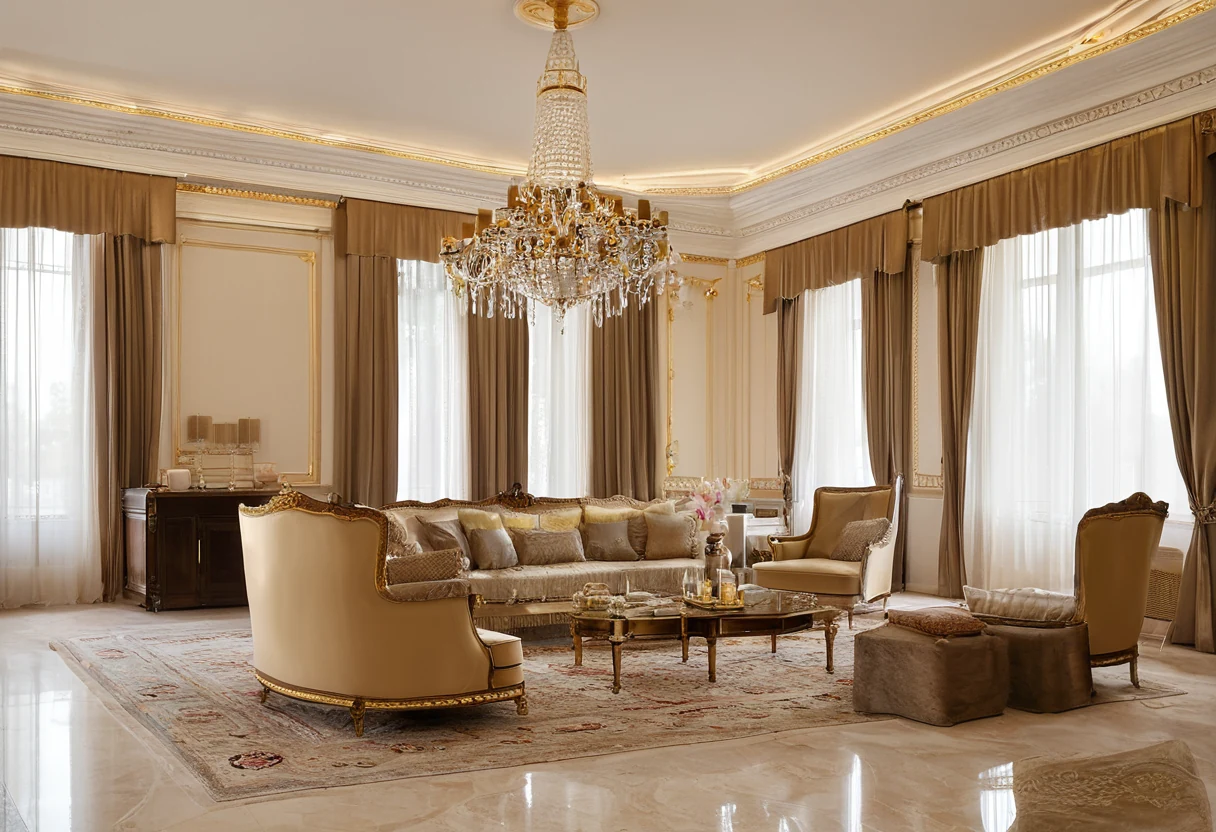
Seven cost lines absorb effectively the entire fit-out budget of a bespoke villa. On the $4.5 million reference model the split runs as follows, and the order surprises most first-time clients: fixed joinery, not loose furniture, is the largest single line.
| Line | Scope | Typical share | Model value |
|---|---|---|---|
| 1. Bespoke joinery and fixed furniture | Doors, paneling, wardrobes, kitchens, vanities, libraries | 25% | $1,125,000 |
| 2. Loose furniture and decorative lighting (FF&E) | Seating, tables, beds, chandeliers, rugs, accessories | 20% | $900,000 |
| 3. Stone, flooring and wall finishes | Marble, parquet, wallcoverings, paint systems | 16% | $720,000 |
| 4. MEP adjustments and integrated systems | HVAC mods, lighting control, AV, automation | 12% | $540,000 |
| 5. Ceilings and decorative plaster | Gypsum geometry, cornices, domes, light coves | 7% | $315,000 |
| 6. Installation, site works and logistics | Crews, protection, shipping, storage, cranage | 10% | $450,000 |
| 7. Design, engineering and supervision | Detailed design, shop drawings, site supervision | 10% | $450,000 |
Line by Line: What Each Share Buys and Where the Risk Hides
Line 1: Joinery at 25 Percent Is the Quality Ceiling of the Whole House
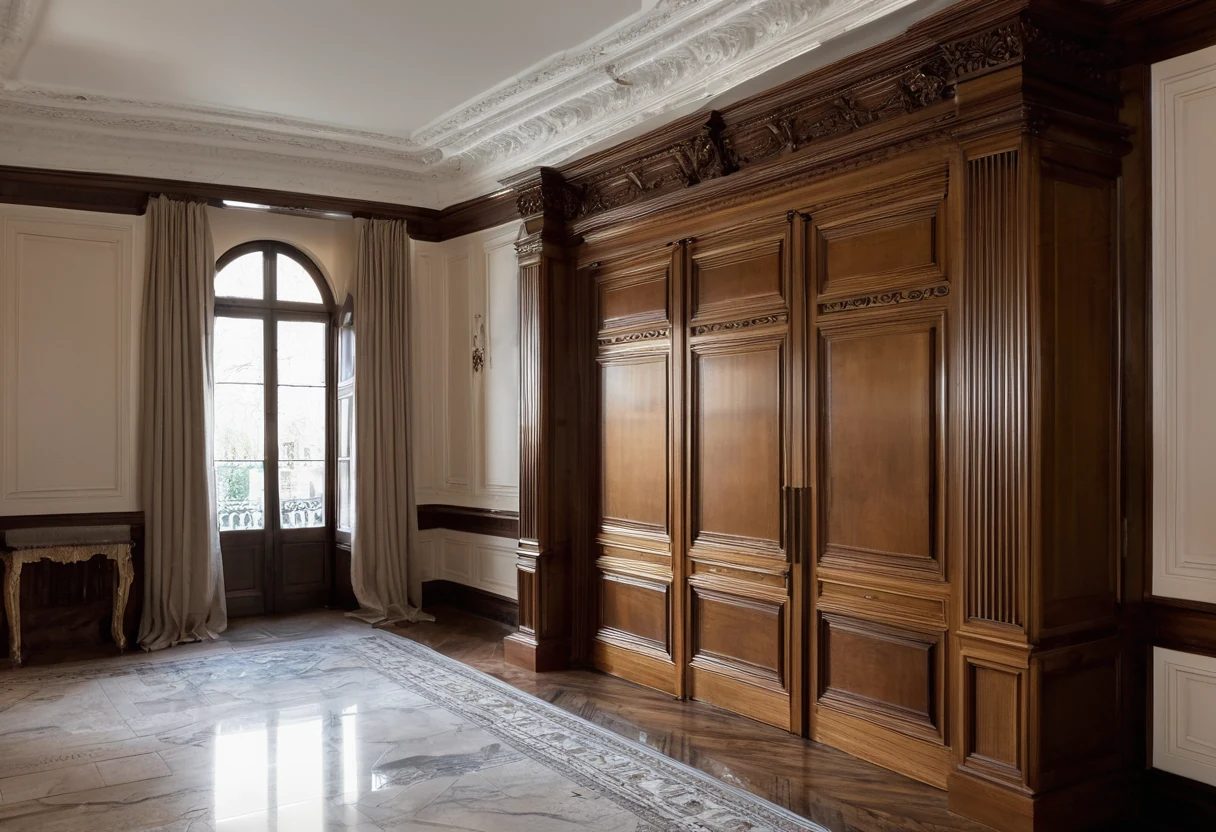
Bespoke joinery, the carved doors, paneled walls, built-in wardrobes and kitchens, is manufactured off site over 4 to 8 months and defines the perceived grade of every room it touches. The hidden risk is substitution: a quotation that says “walnut” without specifying solid sections, veneer grade and finish system leaves room to deliver a product that photographs identically and ages completely differently. Joinery is the last line to economize, because joinery failure is structural, visible and permanent.
Line 2: FF&E at 20 Percent Is Where Provenance Gets Tested
Loose furniture and decorative lighting carry the strongest markup variance in the industry: an identical-looking armchair legitimately spans $2,000 to $20,000 depending on construction and origin. The risk word is “equivalent”: procurement teams under deadline pressure substitute approved pieces with “equivalents” whose savings rarely reach the client. Protection is documentary, not aesthetic: factory order confirmations, origin certificates and serial documentation per significant piece.
Line 3: Stone and Finishes at 16 Percent Punish Late Decisions
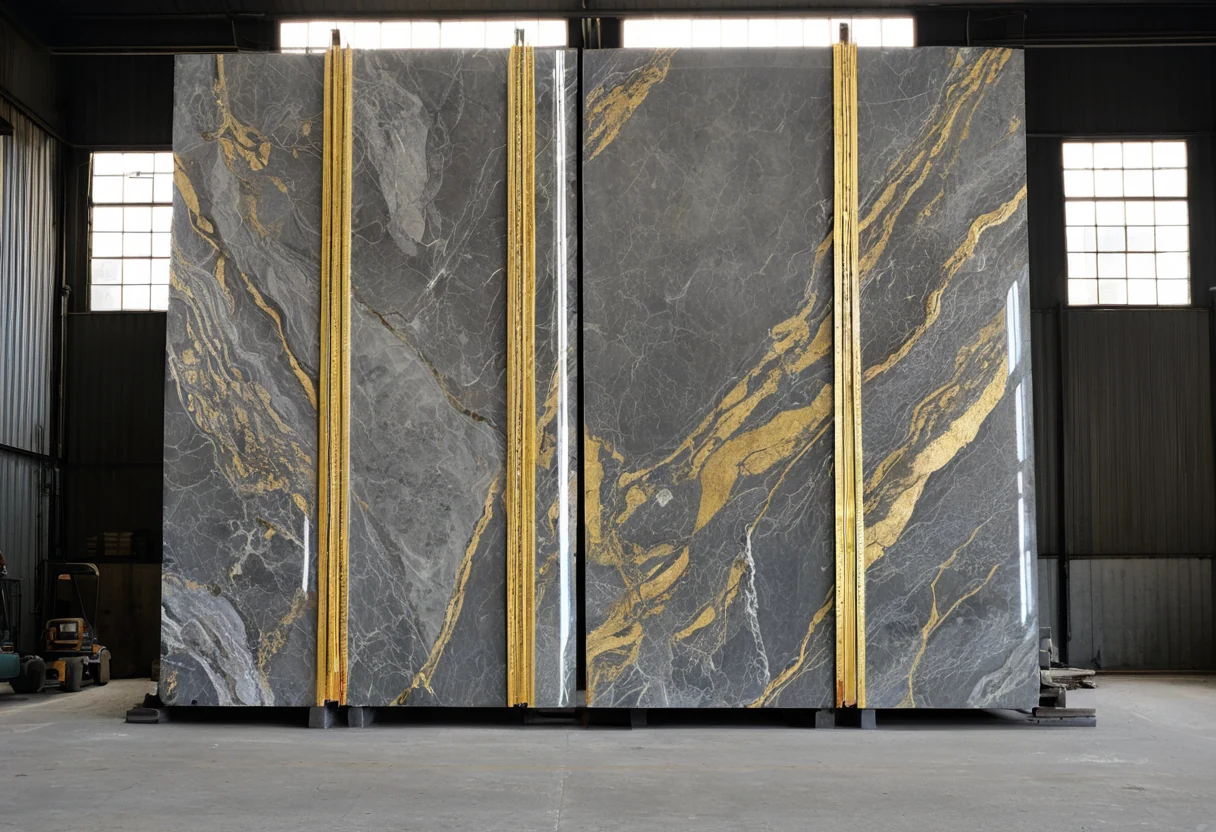
Natural stone is bought as slabs, cut to drawings and bookmatched; premium marble ran $150 to $600 per square meter supplied in 2026, before cutting and laying. The hidden cost is time: stone selections made after site works begin force air freight, re-cutting and idle crews. Lock slab selection before mobilization and inspect actual slabs, not supplier photographs, because veining variance between lots is the single most common luxury-finish dispute.
Line 4: Systems at 12 Percent Are Invisible Until They Are Not
Lighting control, HVAC modification, AV and automation succeed silently or fail publicly. The risk concentrates at interfaces: the joinery workshop, the lighting supplier and the automation integrator each assume the other allowed for transformers, heat dissipation and access hatches. One coordination meeting per month between those three trades is the cheapest insurance in the entire budget.
Lines 5 and 6: Plaster and Logistics, the Quiet 17 Percent
Decorative gypsum work at 7 percent prices by complexity: a plain shadow-gap ceiling and a coffered dome differ by a factor of 5 to 8 per square meter. Logistics at 10 percent covers protection, sequencing, shipping and storage; the classic failure is compressing this line, then paying it back through damaged stone, re-ordered veneer and crews waiting on cranes. Damage rates on unprotected luxury fit-outs are not published statistics, but every experienced project manager carries the same scar stories, which is why floor protection goes down on day one and comes up at handover.
Line 7: Supervision at 10 Percent Is the Line Clients Cut First and Regret Longest
Design development, shop drawings and site supervision convert intent into built fact. A shop drawing is the manufacturing-grade drawing of every joinery piece, stone layout and ceiling section; supervision is the independent check that what arrives matches what was drawn. A rigorous bill of quantities ties the whole structure together, and studios that publish their BOQ methodology for fit-out are signaling, in effect, that their budgets are designed to be audited. When a bid arrives 30 percent below competitors, the discount almost always lives in this line and in substitution allowances, which is why the cheap bid and the final invoice are so often strangers.
The Three Classic Cuts, and the Invoice That Arrives a Year Later
Cost-reduction exercises on villa fit-outs attack the same three lines every time, and each cut produces a predictable second invoice.
- Cutting supervision (saving ~$200,000 on the model): within a year the project pays it back through unaligned veneers, mis-set levels and warranty disputes with no independent documentation. Rework on luxury finishes routinely costs 2 to 3 times the original installation, because removal damages neighboring work.
- Substituting materials (“same look, 30 percent cheaper”): rushed-dried timber moves, low-grade veneer fades unevenly within 12 to 24 months in Gulf sunlight, and “equivalent” stone lots break bookmatch symmetry. The look survives the photo shoot and not the first summer.
- Compressing logistics and program: trades overlap in finished rooms, protection is skipped, and the damage list at handover converts the saved weeks into months of repairs and partial replacements.
The pattern behind all three: cuts target invisible lines, and invisible lines are where durability lives. The phrase clients remember afterward is the industry’s oldest fit-out proverb: 30 percent cheaper usually means paying twice.
The Questions to Ask Before Signing, Line by Line
Seven questions, one per budget line, separate professional contractors from optimistic ones. A confident written answer to each is a green flag; deflection on any two is a tender result by itself.
| Line | The question | The worrying answer |
|---|---|---|
| Joinery | Which items are solid timber, which veneered, and on what core? | “All premium wood” |
| FF&E | Will every significant piece carry a factory order confirmation? | “We source equivalents” |
| Stone | When do I approve physical slabs, and is the lot reserved? | “From the catalog” |
| Systems | Who coordinates joinery, lighting and automation interfaces, by name? | “Each supplier handles his own” |
| Plaster | Is ceiling pricing itemized by profile complexity? | One lump sum per floor |
| Logistics | What is the protection, storage and damage-liability plan? | “Our crews are careful” |
| Supervision | How many site inspections per month, documented how? | “We are always on site” |
A villa fit-out budget is not a price; a villa fit-out budget is an architecture of risk allocation. Clients who read the seven lines, and ask the seven questions, stop buying renders and start buying buildings.
Budget articles often attract serious planners, but the page still needs clean markup and crawl paths; website seo optimization helps that information stay discoverable after publication.