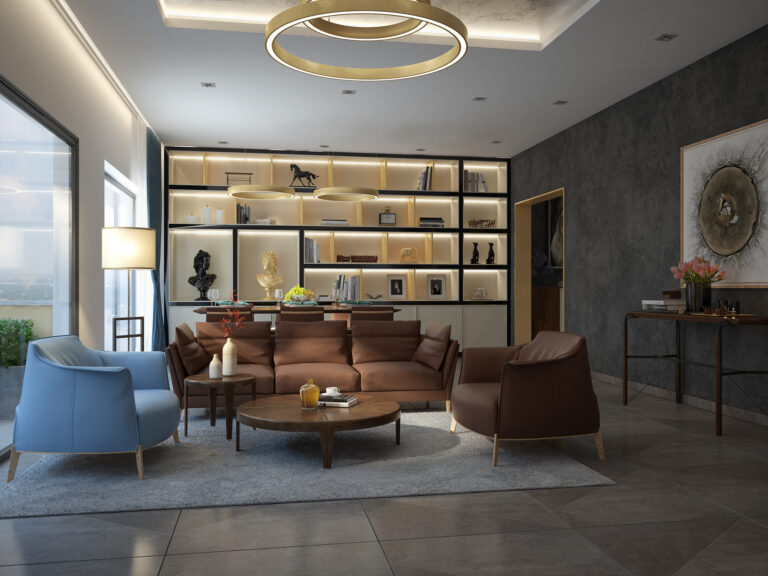
Sofa, Sectional, or Pair of Chairs: Choosing Living Room Furniture by Use
The useful question is not “Which sofa looks best?” but “Should this room be anchored by a sofa, a sectional, or chairs before money, delivery time, and floor space are committed?” The wrong answer can block a door, force poor posture, fail at the stair turn, or make one worn fabric choice ruin a whole seating group.
Choose living room furniture by primary use before choosing a livingroom set
The strongest living room furniture ideas start with use: seat count, viewing angle, traffic flow, pets, cleaning, delivery access, and replacement risk should lead the purchase before anyone commits to a matched livingroom set.
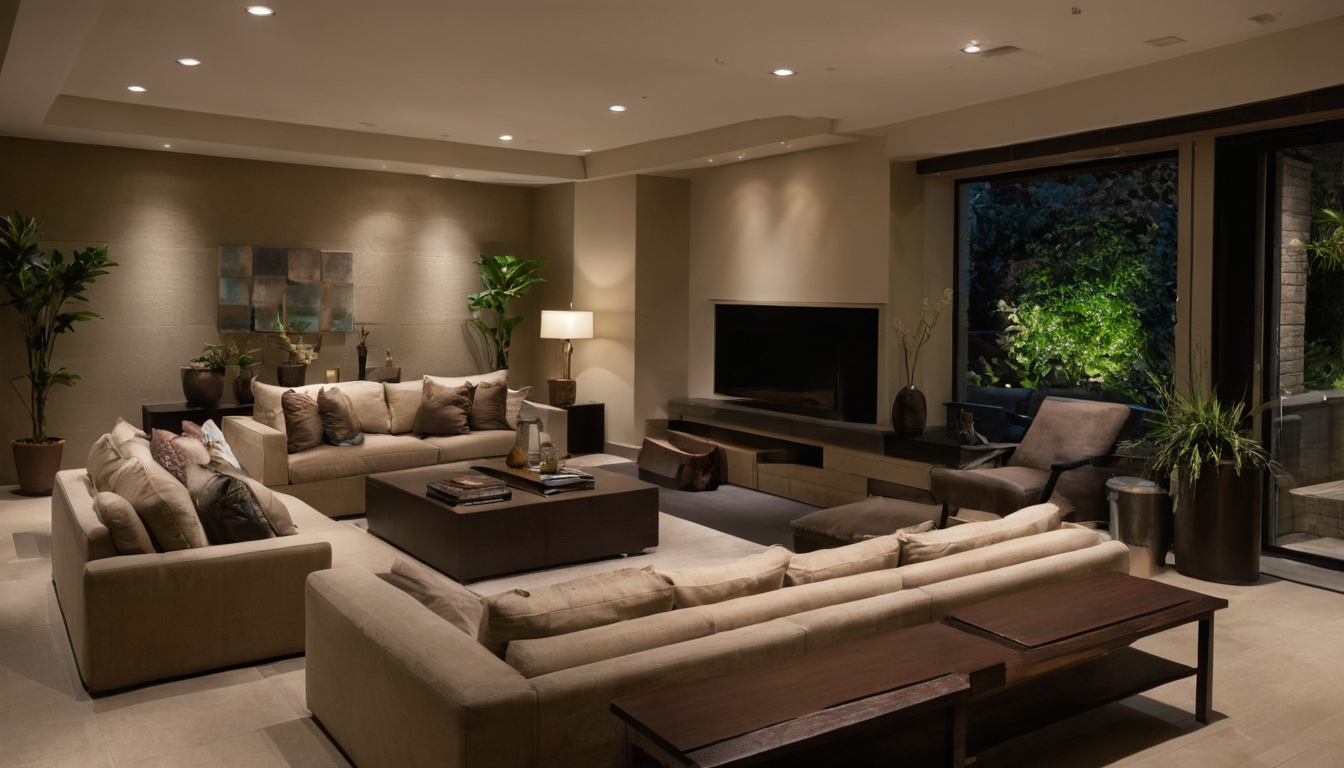
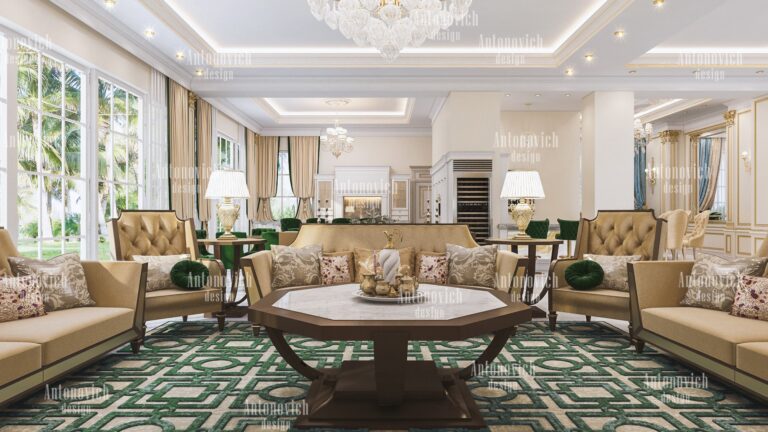
Choose living room furniture by primary use before choosing a livingroom set shown as an editorial reference for proportion and finish coordination.
A use-first seating matrix prevents the wrong living room furniture purchase
Living rooms fail for predictable reasons. A sofa fits the long wall but blocks the balcony door. A sectional seats six but only faces the television. Two chairs look elegant but leave no place to stretch out.
| Seating option | Best primary use | Main risk to check before buying |
|---|---|---|
| Standard sofa | Mixed use, guests, television, occasional lounging | Seat depth may be too upright or too lounge-like |
| Apartment sofa or loveseat | Small rooms, studios, secondary sitting areas | May under-seat the main gathering space |
| Chaise or L-sectional | Family lounging, TV watching, weekend use | Chaise direction can block circulation, doors, radiators, or terrace access |
| Two sofas | Entertaining, symmetrical reception rooms, larger plans | Needs more clearance than many buyers expect |
| Sofa plus chairs | Conversation and television in the same room | Chairs must be scaled to the sofa |
| Pair of chairs or swivel chairs | Reading, formal reception, open-plan zoning | Comfort depends on seat height, arms, depth, and back support |
- Count actual users first. A couple that hosts six people twice a month needs a different plan from a family that watches films nightly.
- Map movement before style. Main walkways, door swings, stair landings, and coffee table clearance matter more than a showroom photograph.
- Plan lighting with seating. ENERGY STAR states that qualified LED lighting uses at least 75 percent less energy and lasts up to 25 times longer than incandescent lighting.
- Sequence new materials carefully. The U.S. Environmental Protection Agency identifies paints, varnishes, waxes, cleaning products, building materials, and furnishings as common indoor sources of volatile organic compounds.
A matched livingroom set is convenient but less adaptable than specified pieces
A living room set can be useful when the buyer needs one order, one delivery window, one fabric family, and fewer decisions. The tradeoff is reduced control: a bundled loveseat may duplicate the sofa’s bulk, a matching chair may be too deep for reading, and one damaged or discontinued piece can make replacement difficult.
A sofa is the safest choice for mixed-use living room ideas
A sofa is usually the safest anchor when one room must handle conversation, television, guests, and future rearrangement, especially where doors, windows, radiators, rental limits, or tight delivery routes make a large sectional too fixed.
A sofa plus two chairs works when conversation matters as much as television
A sofa with two chairs is the most adaptable layout when a room needs both a screen and face-to-face seating. The sofa can face the TV, fireplace, or main view, while the chairs angle inward to form a conversation zone.
Scale decides whether the layout feels calm or crowded. Apartment sofas often run about 72 to 78 inches long, standard three-seat sofas commonly sit around 80 to 90 inches, and extra-long sofas can reach 96 inches or more. A seat depth around 21 to 23 inches feels conversational, while 24 inches or deeper reads as lounge seating.
Leave about 16 to 18 inches between the sofa and coffee table, keep main walkways closer to 30 to 36 inches where possible, and avoid placing chair arms where they pinch a doorway or balcony route.
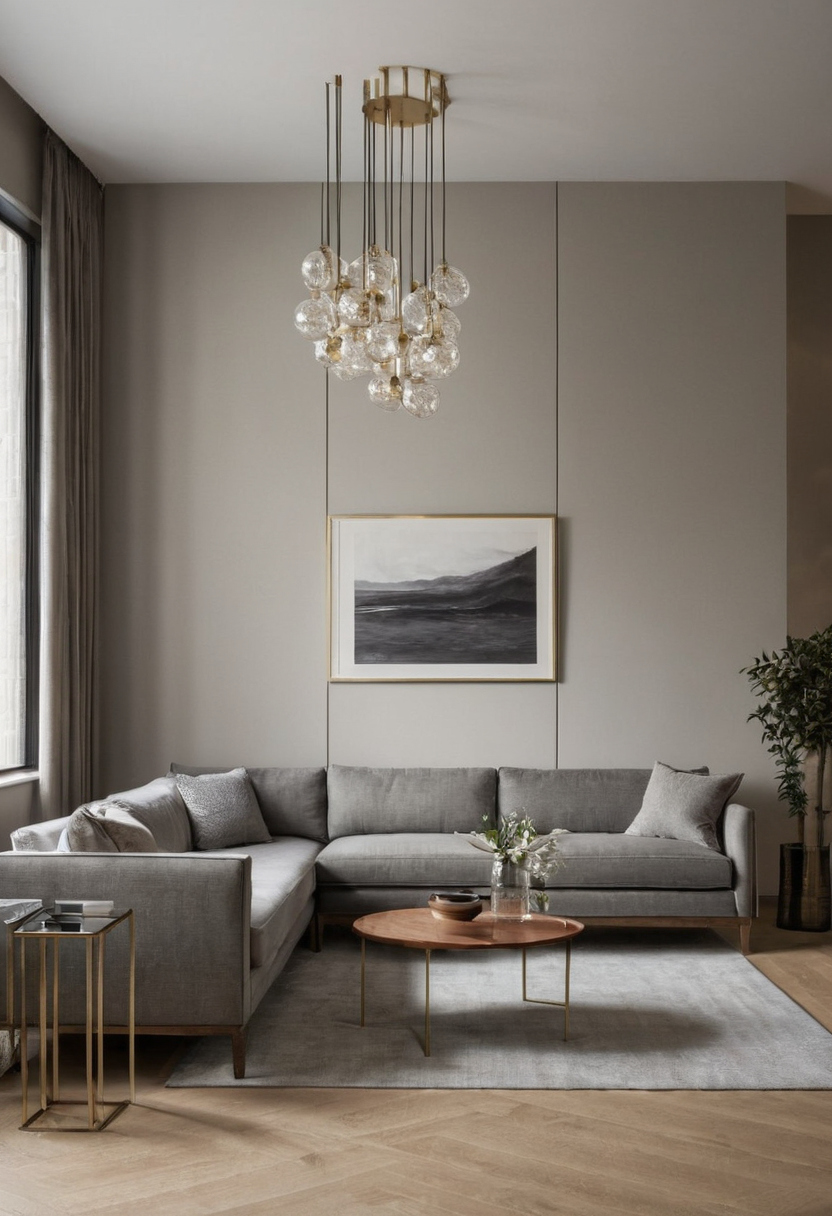
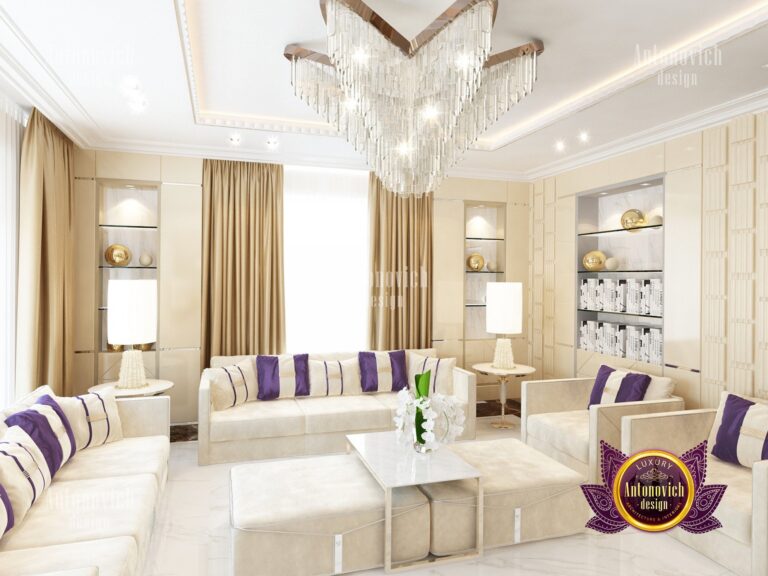
A sofa is the safest choice for mixed-use living room ideas shown as an editorial reference for proportion and finish coordination.
A sofa is easier to replace than a full sectional when fabric, style, or household needs change
A single sofa limits replacement risk. If fabric wears, cushions collapse, pets damage one surface, or a future home needs a different layout, replacing one sofa is usually simpler than matching sectional modules, dye lots, connectors, and discontinued collections.
A sectional is best when the living room is mainly for lounging, TV, or family use
A sectional is the right living room furniture choice when the room’s main job is shared lounging, movie watching, or family seating, and when the room has a clear TV wall, circulation around the seating, and delivery access for large or modular pieces.
A chaise sectional solves lounging but can block circulation in narrow rooms
A chaise sectional works best when the chaise does not interrupt a doorway, balcony route, kitchen path, or main entry line. Typical chaise sectionals run about 85 to 120 inches wide, with the chaise projecting roughly 60 to 70 inches into the room.
- Choose a chaise sectional when the room has an open corner, a fixed TV wall, and enough space for a walkway beside or behind the chaise.
- Avoid a chaise sectional in a long narrow room where the chaise cuts the room into two unusable strips.
- Confirm chaise direction from the retailer’s viewpoint. Left-facing or right-facing usually describes the side of the chaise as you stand facing the sectional.
A modular sectional is safer when delivery access or future moves are uncertain
A modular sectional reduces purchase risk when elevators, stair turns, tight hallways, or future homes are part of the decision. A one-piece sectional can fail at the building entrance even if the room is large enough, while separate modules can often rotate through doors and landings more easily.
- Measure delivery access: doorway width, hallway width, stair landing depth, elevator size, stair ceiling height, and diagonal clearance at tight turns.
- Compare construction types: one-piece sectionals are least flexible, knock-down frames partly disassemble, modular units arrive as separate seats, and clip-together sectionals depend on reliable connectors.
- Plan for replacement risk: discontinued modules, proprietary clips, changed leg finishes, and new dye lots can make later additions look almost right but not identical.
A pair of chairs is better for formal reception, reading, and tight living rooms
A pair of chairs can outperform a sofa or sectional when the room is used for conversation, reading, flexible guest seating, or a formal reception zone, especially where several doorways make one large furniture block impractical.
Chair-based seating solves a different problem than a sofa. Two chairs can angle toward a fireplace, turn toward a window, frame a small table, or split around an awkward corner. A lounge or club chair often occupies about 30 to 40 inches in width and depth, while a slipper or occasional chair may sit closer to 24 to 32 inches wide.
Chair comfort should follow the people who will sit there. A 2023 article in Biomimetics on chair size design based on user height proposes determining key chair dimensions from the intended users’ height range when complete anthropometric data are unavailable or outdated.
Two chairs and a small table can create a complete living room zone
Two chairs need a shared task to avoid looking like leftover furniture. A small table between them gives guests a place for a glass, book, or phone, and a floor lamp gives the arrangement a reason to exist after dark. Side tables usually work best when the tabletop sits near chair arm height, often around 20 to 26 inches high.
Swivel chairs make open-plan living rooms more flexible
Swivel chairs are useful when one living room must face both a TV and a conversation area, or when the seating group also relates to a kitchen or dining space. A swivel chair needs clear space for rotation so it does not strike a table, wall, curtain, or another seat.
Living room furniture dimensions should be checked before style, fabric, or color
Living room furniture dimensions decide whether a layout functions before upholstery or color matters, so check seat height, seat depth, arm height, overall length, chaise projection, coffee table distance, door swing, walkway clearance, and delivery route before comparing fabrics.
| Dimension check | Useful residential range | Planning risk if ignored |
|---|---|---|
| Sofa or loveseat length | About 60 to 96 inches for most compact and standard pieces | Arms, not just cushions, may crowd side tables or doors |
| Sectional or chaise projection | Often 60 to 70 inches deep at the chaise | The chaise can block the main path through the room |
| Lounge chair footprint | Roughly 28 to 36 inches wide and 30 to 38 inches deep | Swivel clearance and angled placement need extra floor space |
| Coffee table gap | 14 to 18 inches from seat front | Too tight catches knees; too far makes drinks awkward |
| Walkways | 30 to 36 inches for main paths, about 24 inches for secondary paths | Good furniture feels oversized when circulation pinches |
Measure the room, then tape the furniture footprint on the floor
Start with room length and width, then openings, door swings, window sill heights, radiator or floor vent positions, outlet locations, TV position, rug size, and the exact furniture footprint from the retailer specification sheet. Use painter’s tape to mark the floor before ordering.
The common mistake is measuring only cushion width. Overall width includes arms, recliners need extension room, and deep sectionals need diagonal clearance during delivery. For broader procurement planning, see how furniture fits into a broader fit-out budget.
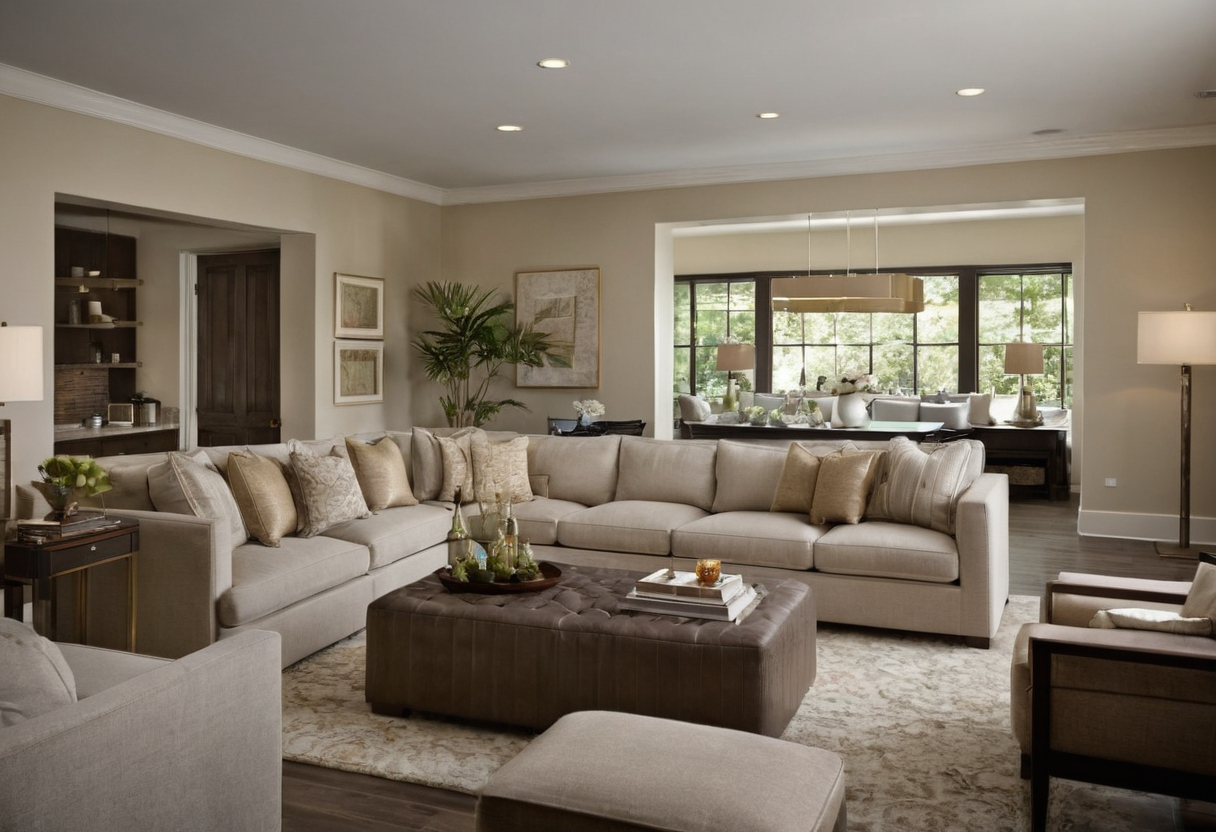
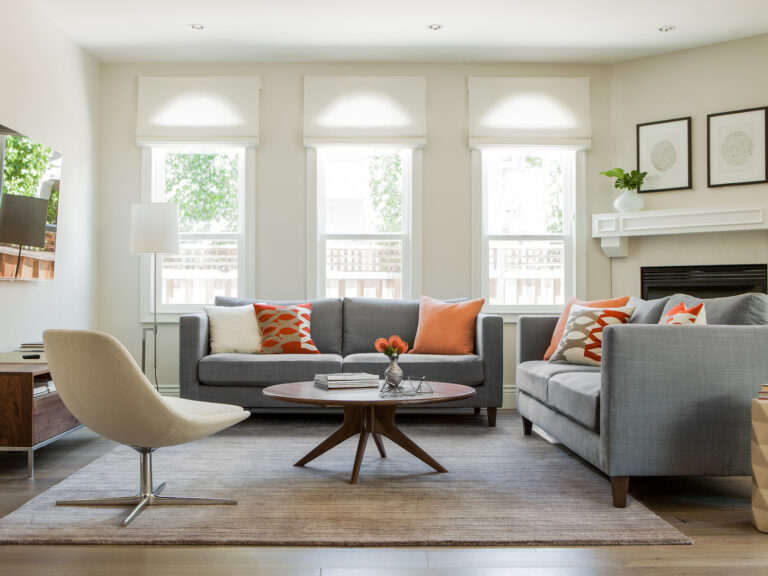
Living room furniture dimensions should be checked before style, fabric, or color shown with finish, fixture, and clearance relationships visible.
Seat depth changes how formal or relaxed the living room feels
Seat depth sets posture. Upright conversation seating often sits around 20 to 22 inches deep, standard lounging around 22 to 24 inches, and extra-deep sofas above that range usually need pillows behind shorter users. Seat height around 17 to 19 inches is easier for many adults to stand from.
Upholstery durability matters more than trend color for everyday living room furnishing ideas
For everyday living room furnishing ideas, upholstery should be specified by household risk before trend color because children, pets, meals, sunlight, and heavy TV use can wear out the wrong fabric long before the shape looks dated.
Read upholstery labels like material specifications. Check abrasion rating, fiber content, weave tightness, stain treatment, pilling resistance, lightfastness, cleaning code, cushion fill, slipcovers, and warranty terms. Performance fabric often suits active rooms, leather can wipe clean but may scratch, faux leather can peel, velvet shows pressure marks, linen blends wrinkle, and microfiber often releases hair with less effort.
Pet homes need tight weaves, cleanable fabrics, and replaceable components
Pet-heavy living rooms need tight weaves, lower snag risk, removable cushion covers, and components that can be replaced before the whole sofa fails. Loose bouclé, open linen, pale untreated fabric, delicate velvet, and exposed wood arms carry higher risk in homes with claws, shedding, or chewing. For more detail, start with pet-friendly decor and material choices.
Accent pillows and throws should support the seating decision, not hide a bad one
Accent pillows work after the seating form is correct. Deep sofas may need firmer back pillows, upright sofas need slimmer cushions, sectionals need fewer loose pieces across the corner, and chairs need pillows that do not steal seat depth. Color contrast belongs in this finishing layer, especially when using accent pillows after the seating plan is set.
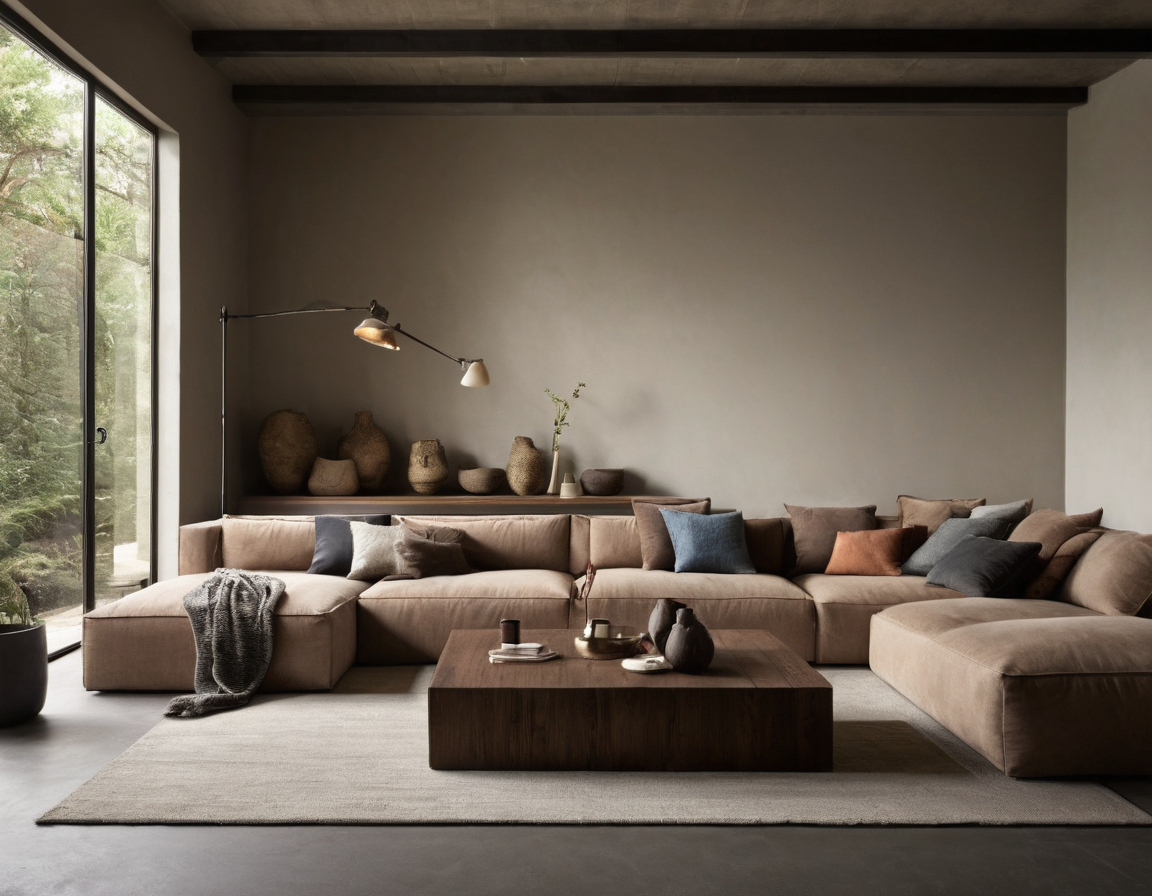
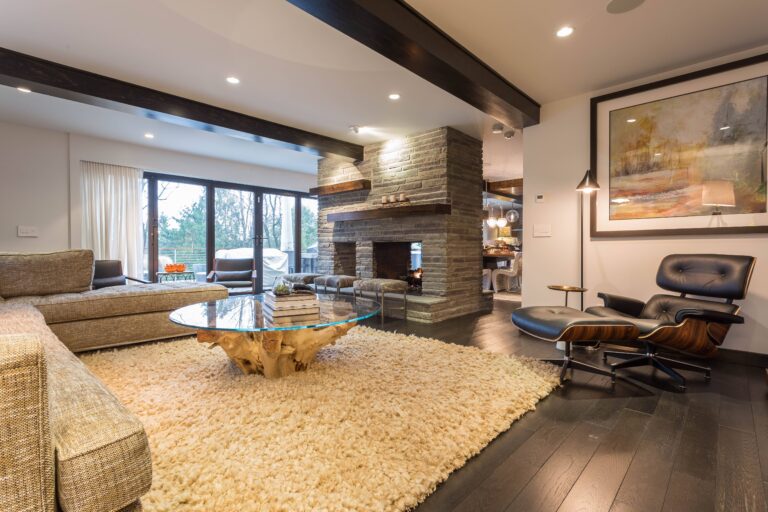
Upholstery durability matters more than trend color for everyday living room furnishing ideas shown with floor, wall, and fixture relationships visible.
Use these living room furniture ideas by room type
The best living room furniture ideas change by room type because the same sofa or sectional behaves differently in a studio, long rectangle, open-plan family room, or formal reception area.
Small living rooms usually need one sofa or two chairs, not oversized sectionals
A small apartment living room usually works best with an apartment sofa, loveseat, or two compact chairs paired with a storage ottoman. Avoid deep rolled arms, bulky recliners, and chaise sectionals that leave no path from the entry door to the seating. Keep a clear walking route of about 30 inches where possible.
A small sectional can still work when the room has one unused corner, no competing fireplace wall, and a TV directly opposite the long side. Choose a reversible chaise or modular two-piece sectional if the entry, window position, or future move is uncertain.
A formal front room needs a different answer. Two upholstered chairs with a small table between them can create a complete reception zone without pretending the room is a TV lounge.
Long rectangular living rooms need zoning before furniture shopping
A long rectangular living room should be divided before furniture is ordered. Float a sofa across part of the room, place two chairs opposite or at a right angle, and use a console behind the sofa to make the zone feel intentional. Avoid pushing every seat against the longest wall, because that exaggerates the corridor effect.
An open-plan family room with a TV usually needs a sofa or sectional facing the screen, but kitchen circulation controls the layout. Keep the back of the sofa out of the cooking and dining route, and check that people can pass behind seating without brushing cushions.
FAQ
Is it better to have a sectional or two sofas in a living room?
A sectional is usually better for TV, lounging, and family use. Two sofas are better for larger rooms, formal symmetry, and entertaining. The deciding factors are circulation, delivery access, and whether the room needs conversation across the seating group or lounging in one direction.
What is the 2/3 rule for sofas, and when does it help with living room scale?
The 2/3 rule is a visual proportion guideline: a sofa often looks balanced when it is about two-thirds the width of the wall, rug, or focal element it relates to. The rule helps with scale, but it should not override door swings, walkways, side tables, or delivery constraints.
What is the 2-2-1 rule for sofas and chairs in a living room?
The 2-2-1 rule describes a seating mix of two sofas, two chairs, and one main table or anchor piece. It can work in a generous room, but many apartments and narrow rooms cannot support that much furniture without pinching circulation.
How do you arrange a sofa and two chairs in a small living room with a TV?
Place the sofa toward the TV, then angle the two chairs inward so guests can talk without blocking the screen. Use compact chairs, keep the coffee table about 14 to 18 inches from the sofa, and protect the main walking path before adding side tables.
What is the 3-5-7 rule in interior design, and does it matter when choosing seating?
The 3-5-7 rule is a styling guideline that odd-numbered groups can feel more natural than even-numbered groups. It matters less than seat count, comfort, and clearance. Use it for pillows, accessories, or small tables after the sofa, sectional, or chairs have passed the room test.