Foam Density and ILD Ratings for Commercial Living Room Seating in Rental Properties
A rental property owner replacing sofa cushions every twelve months needs a specific material number on the purchase order, not a style guide. Specify 2.5 lb per cubic foot polyurethane foam at 30 to 36 Indentation Load Deflection for seat cushions. This combination prevents tenants from feeling the plywood deck beneath the fabric after a year of turnover. Standard residential blanks fail because they lack the polymer mass needed to survive repeated compression cycles in multi-family living rooms. See also: choosing living room furniture by use.
Contents
- What foam density prevents bottoming out in rental living room seating?
- What ILD rating delivers the right firmness for a rental sofa?
- How do foam density and ILD work together on a purchase order?
- Which BIFMA durability tests apply to rental living room seating?
- How to write a foam specification for a replacement livingroom set order
- What are the most common living room furniture ideas for high-turnover rentals?
Key takeaways
- For rental property living room seating, 2.5 lb per cubic foot polyurethane foam is the minimum density that resists permanent compression under constant tenant turnover.
- Indentation Load Deflection measures firmness, not durability.
- Density determines how long a cushion survives; ILD determines how it feels on day one.
- BIFMA X5.4 testing standards for lounge and public seating define the drop-test cycles and static load parameters that commercial-grade cushions must survive.
- A valid purchase order for rental seating cushions must state the exact density in pounds per cubic foot, the target ILD range, the foam type such as conventional or high-resiliency, and the required compression set percentage.

Foam Density and ILD Ratings for Commercial Living Room Seating in Rental Properties.
- Minimum density: 2.5 lb per cubic foot for standard rentals; 3.0 lb high-resiliency for short-term or student housing.
- Seat firmness (ILD): 30 to 36 for seats; 18 to 24 for back cushions.
- Compression set limit: 10 percent or lower for contract-grade use.
- Manufacturing tolerances: Plus or minus 0.1 lb for density; plus or minus 10 percent for ILD.
What foam density prevents bottoming out in rental living room seating?
For rental property living room seating, 2.5 lb per cubic foot polyurethane foam is the minimum density that resists permanent compression under constant tenant turnover. Standard 1.8 lb residential foam typically fails within twelve to eighteen months in high-use living rooms. Put 2.5 lb density on every cushion purchase order.
Foam density measures the weight of one cubic foot of raw polyurethane material before cutting or wrapping. The Polyurethane Foam Association classifies densities below 1.8 lb per cubic foot as conventional residential grade, while contract and commercial specifications start at 2.5 lb. Higher density means more polymer per cubic inch and cell walls capable of surviving repeated loading cycles. Landlords evaluating living room furniture ideas for replacement cushions must treat density as a structural requirement, not an optional upgrade. Any living room set ordered without a written density specification defaults to the cheapest available blank, which almost always means 1.8 lb or lower.
Tenant turnover speeds up this mechanical failure. A single-family homeowner might generate 3,000 sitting cycles annually on a sofa. A rental unit with rotating occupants pushes that count past 10,000 cycles per year. At that rate, 1.8 lb foam reaches its structural limit in twelve to eighteen months. The upholstery cover remains intact while the core collapses, creating a service call that costs more in labor and lost rent than the initial savings on cheap foam.
A 3.0 lb HR specification costs more but extends cushion life to five years or more under severe abuse. Property owners replacing entire seating groups every two years spend significantly more over a decade than those who specify 3.0 lb HR foam initially. Before committing to a bulk order, verify that the exact foam type matches the intended use by choosing living room furniture by use, since a recliner mechanism demands different internal tolerances than a stationary sofa. Density determines how long the cushion survives, but density alone does not dictate how firm the seat feels on day one.
What ILD rating delivers the right firmness for a rental sofa?
Indentation Load Deflection measures firmness, not durability. For rental living room seat cushions, an ILD between 30 and 36 provides enough support to prevent bottoming out while remaining comfortable for diverse tenants. Back cushions need a softer 18 to 24 ILD to maintain ergonomic support without compressing the seat core.
ILD testing follows ASTM D3574 Test C methodology. A standard indenter foot compresses a foam sample to 25 percent of its original thickness, and the force required to hold that compression registers as the ILD number in pounds. The measurement captures how the foam feels on day one. It does not predict how many compression cycles the foam survives before losing shape. Density handles lifespan; ILD handles comfort.
What ILD rating delivers the right firmness for a rental sofa.
Rental properties need specific firmness targets because tenant turnover brings unpredictable body weights and sitting habits. A seat cushion rated below 30 ILD allows heavier occupants to sink through the foam until they feel the plywood deck or sinuous springs beneath. Cushions above 36 ILD feel like stiff boards to lighter tenants, generating complaints and premature replacement requests. Staying inside the 30 to 36 range covers most adult weights in a multi-family unit without sacrificing structural support.
Back cushions face different mechanical demands. These panels do not carry full body weight, so a lower ILD keeps the spine aligned against the seat back. Specifying seat-grade firmness for a back panel pushes the occupant forward, defeating the purpose of the lumbar zone.
How do foam density and ILD work together on a purchase order?
Density determines how long a cushion survives; ILD determines how it feels on day one. A 2.5 lb density foam at 32 ILD will outlast a 1.8 lb foam at 45 ILD, even though the latter feels firmer initially. Landlords must specify both numbers independently on every replacement cushion order to avoid supplier substitutions.
- Density (lb/ft³) governs cell structure integrity and compression recovery over thousands of cycles.
- ILD measures the pounds of force required to compress a four-inch foam sample by 25 percent.
- A high-ILD, low-density foam collapses quickly because thin cell walls lack structural mass regardless of initial stiffness.
Check these fields against your written specification. A mismatch on any single line item means the delivered cushions will fail prematurely.
Which BIFMA durability tests apply to rental living room seating?
BIFMA X5.4 testing standards for lounge and public seating define the drop-test cycles and static load parameters that commercial-grade cushions must survive. Though originally designed for office environments, these metrics provide the only standardized baseline for evaluating whether a living room set will endure multi-family tenant abuse without sagging.
The standard drop test releases a 125-pound weight onto the seat center from six inches above the cushion surface. Rental seating requires foam cores that complete at least 100,000 of these impact cycles without permanent deformation exceeding ten percent of the original thickness. A sofa failing this threshold bottoms out within twelve months of tenant turnover.
The static load test applies a sustained downward force of 300 pounds to the seat deck for extended durations. Cushions specified for high-turnover rentals must return to their starting profile after this load clears. Foam densities below 2.5 lb per cubic foot routinely fail this recovery requirement under repeated tenant use.
How to write a foam specification for a replacement livingroom set order
A valid purchase order for rental seating cushions must state the exact density in pounds per cubic foot, the target ILD range, the foam type such as conventional or high-resiliency, and the required compression set percentage. Leaving any of these four variables blank lets suppliers substitute cheaper materials that fail prematurely in living rooms.
ILD measurements carry a standard manufacturing tolerance of plus or minus 10 percent. A seat cushion specified at 33 ILD will test between 30 and 36 ILD from the same production run. Landlords checking incoming cushions need a calibrated force gauge to confirm the delivered foam falls within this accepted range before approving installation in tenant units.
Specifying TB 117-2013 and NFPA 260 on the same document prevents a situation where the foam meets the density requirement but fails the local fire code inspection. Once the cushion core is locked down, the purchasing decision turns to frame style and spatial layout. Landlords outfitting tight units should review reclining sofa clearances for small living rooms to ensure moving mechanisms have adequate space, and coordinate planning furniture coverage and walkways around the new seating footprint.
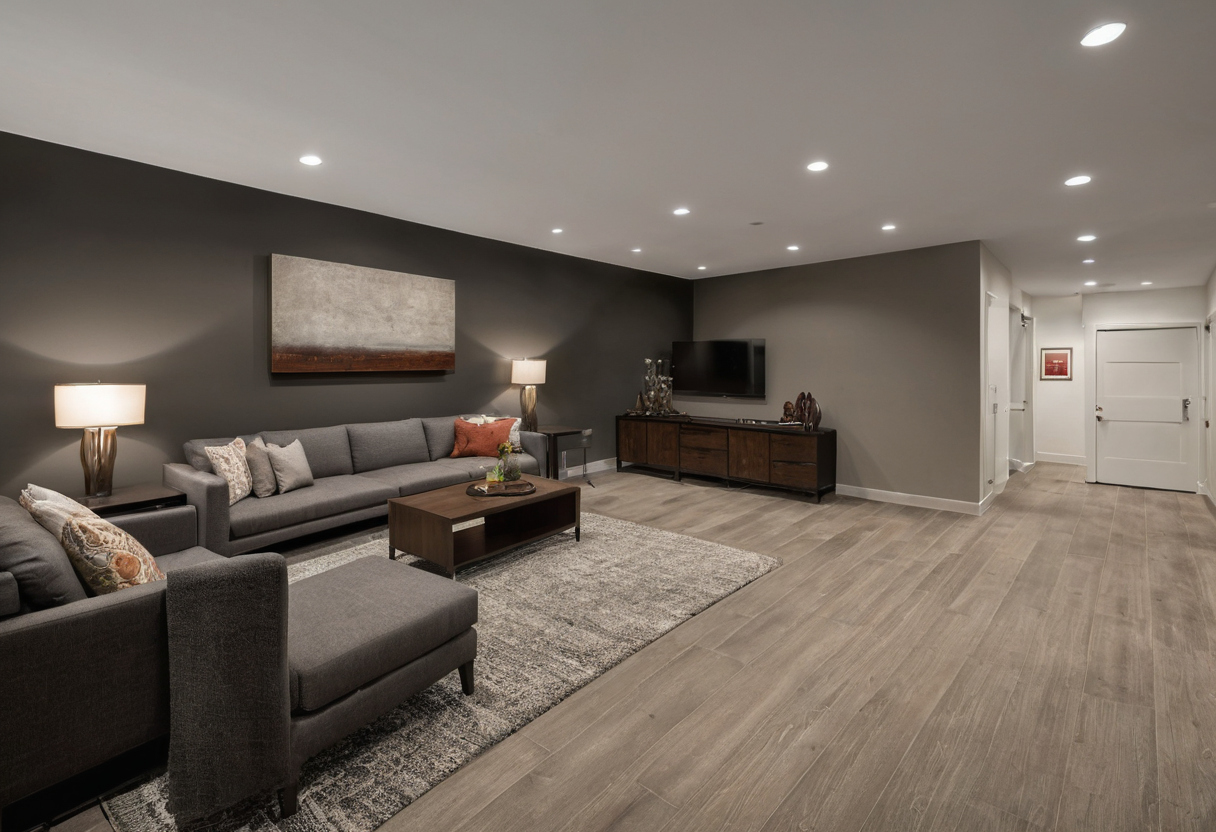
How to write a foam specification for a replacement livingroom set order.
What are the most common living room furniture ideas for high-turnover rentals?
When selecting living room furniture ideas for rental properties, prioritize frames built for dense 2.5 lb foam over decorative styling. A simple kiln-dried hardwood frame with sinuous springs paired with high-density cushions outperforms heavily styled but lightly built alternatives across multiple living rooms.

What are the most common living room furniture ideas for high-turnover rentals.
Replacing individual seat cushions costs a fraction of buying an entire living room set annually. Write your next purchase order specifying density and frame gauge first, then select upholstery fabric to match those structural constraints. Request a foam density specification sheet for your next commercial seating order to lock these variables before production begins.
For more on this topic, see other guides on this site.